Choosing the right display for your home entertainment or professional needs can feel like a labyrinth of specifications and price tags. You’re not just buying a screen; you’re investing in an experience, and the “true cost” extends far beyond the initial purchase. When pitting a projector against a TV, many factors come into play, from upfront expenses to long-term operational costs like power consumption, maintenance, and longevity. Understanding these dynamics is crucial to making a savvy decision that aligns with both your budget and your viewing preferences. Let’s embark on a detailed exploration to uncover the hidden financial aspects and help you determine whether a projector or a TV offers the better value for your unique setup.
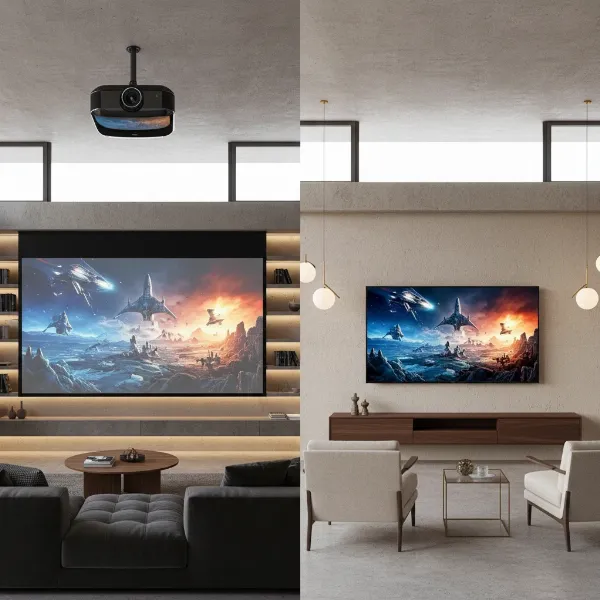 A side-by-side comparison illustrating a large projection screen setup versus a modern television in a living room.
An Overview of Projectors
Projectors, at their core, are devices designed to project an image onto a separate surface, typically a screen or a wall. Their primary utility lies in their ability to create expansive display sizes, often far exceeding what a television can achieve at a comparable price point. The history of projection technology traces back to early forms of magic lanterns, evolving through film projectors to the sophisticated digital projectors we use today.
Modern projectors can be broadly categorized by their display technology:
- DLP (Digital Light Processing): Known for sharp images, high contrast, and minimal motion blur. They use a DLP chip with millions of tiny mirrors to reflect light.
- LCD (Liquid Crystal Display): These projectors pass light through three LCD panels (red, green, blue) to create the image. They typically offer vibrant colors and good light efficiency.
- LED (Light Emitting Diode): Utilizing LED light sources, these projectors boast exceptionally long lifespans, instant on/off, and often a more compact design.
- Laser: The newest and most premium technology, laser projectors offer superior brightness, color accuracy, and incredibly long lifespans, rivaling and often exceeding those of traditional TVs.
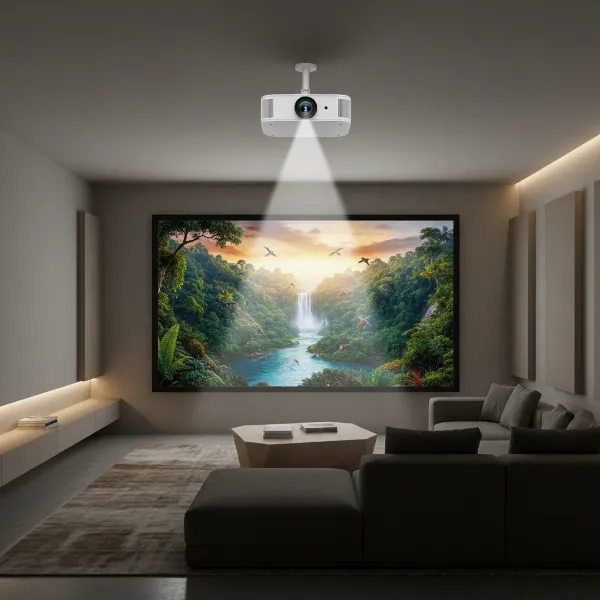 A modern digital projector creating a large, vibrant image on a screen in a contemporary room setting.
Key Factors When Choosing Your Display
When you’re deciding between a projector and a TV, several critical factors influence not only the initial investment but also the long-term running costs. Delving into these specifications helps clarify where your money truly goes.
Brightness (Lumen): This measures the light output of a projector. More lumens mean a brighter image, which is essential for viewing in rooms with ambient light. For a dedicated home theater, 1,500-2,500 lumens might suffice, while brighter living spaces or office presentations could require 3,000 lumens or more to compete with ambient light effectively. TVs inherently produce their own light, generally offering much higher perceived brightness.
Resolution: This defines the number of pixels in the image, directly impacting sharpness and detail. Common resolutions include SVGA (800×600), XGA (1024×768), 720p (1280×720), 1080p (1920×1080), and 4K UHD (3840×2160). As with TVs, higher resolutions like 4K offer a more immersive and detailed viewing experience, though they come with a higher price tag.
Contrast Ratio: This indicates the difference between the darkest black and the brightest white a display can produce. A higher contrast ratio results in more detailed shadows, richer colors, and a greater sense of depth in the image. This is particularly important for movies and cinematic content.
Light Source Lifespan (Lamp Life): For projectors, the light source is a significant consumable. Traditional lamp-based projectors have lifespans typically ranging from 1,000 to 5,000 hours. In contrast, LED projectors can last up to 60,000 hours, and laser projectors commonly offer 20,000 to 30,000 hours or more. TVs are generally expected to last many years without the need for light source replacement.
Keystone Correction: This feature allows you to correct distorted images (trapezoidal shape) that occur when the projector is not perfectly perpendicular to the screen. It’s vital for flexible placement but can sometimes slightly reduce image quality.
Throw Ratio: This is the ratio between the projection distance and the width of the projected image. It determines how far away your projector needs to be from the screen to achieve a certain screen size. Short-throw and ultra-short-throw projectors can project large images from very close distances, ideal for smaller rooms.
Connectivity: Modern projectors and TVs offer a range of ports. HDMI is standard for high-definition video and audio. VGA is still found on some projectors for older devices. USB ports enable media playback, while wireless connectivity (Wi-Fi, Bluetooth) allows for screen mirroring and streaming.
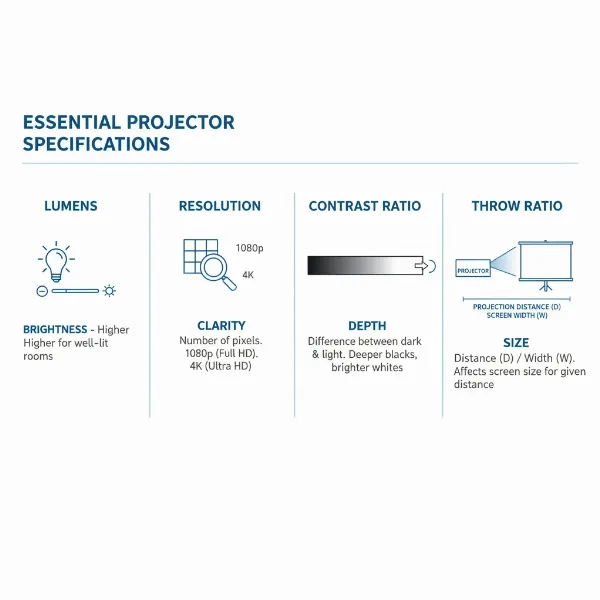 An infographic visually representing key projector specifications like lumens, resolution, contrast ratio, and throw ratio.
A Head-to-Head Comparison of Projector Types
Each projector technology offers a distinct balance of performance, cost, and maintenance. Understanding these differences is key to predicting your running costs.
DLP Projectors
|
Our Picks for the Best projector in 2026
As an Amazon Associate I earn from qualifying purchases.
|
||
| Num | Product | Action |
|---|---|---|
| 1 | 【Officially-Licensed APP & Native 1080P】Thinnest 1.81\" Smart Mini Projector with WiFi and Bluetooth, Auto Focus & Keystone Portable Outdoor Projector, VOPLLS 4K Support Home Movie Projector |

|
| 2 | 1500 ANSI Official Licensed Google TV Smart Projector, HAPPRUN 4K Full HD Home Theater with Auto Focus, Dolby Sound, Wi-Fi Bluetooth, Built-in Apps, Compatible with Phone & PC, Indoor & Outdoor Use |
|
| 3 | HAPPRUN Native 1080P Bluetooth Mini Projector, Full HD Portable Outdoor Movie Projector with Built-in Speaker, Compatible with Smartphone, HDMI, USB, AV, Fire Stick, PS5 for Home, Bedroom, Outdoor Use |
|
| 4 | Projector-4K with WiFi and Bluetooth:[3500 ANSI/60W Dolby Audio/Official Licensed Apps], Outdoor-Projector with Smart OS 2.0 & AI Auto Focus,ONOAYO ONO5Pro 2.0 Smart Movie Projector for Indoor/Outdoor |
|
| 5 | Epson Pro EX9270 Wireless 1080p 3LCD Projector 4,100 Lumens Color and White Brightness, Apple AirPlay, Miracast, Stream from Phone or Laptop, 2 HDMI Ports, 1.6x Optical Zoom, Built-In Speaker |
|
| 6 | [3500 ANSI/ Official Apps/65W Audio] Outdoor 4K Projector with WiFi and Bluetooth, Auto Focus, Auto Keystone Smart Projector Support DoIby Audio, 2026 Upgrade GO2 Short Throw Projector with 360°Stand |
|
| 7 | Aurzen Roku TV Smart Projector with Wifi and Bluetooth, Roku Streaming Experience Built-in, 1080P FHD, DoIby Audio, Auto Focus & Keystone, Zoom, Movie Portable Outdoor Mini Projector, White |
|
| 8 | 【Official Licensed Google TV】4K Smart Projector with WiFi and Bluetooth, VOPLLS Outdoor Projectors with Dolby/Auto Focus, Portable Movie Phone Wireless Gaming Wifi Proyector for Bedroom/Home/Celling |
|
| 9 | Epson Pro EX11000 3-Chip 3LCD Full HD 1080p Wireless Laser Projector, 4,600 Lumens Color/White Brightness, Miracast, 2 HDMI Ports, USB Power for Streaming, Built-in 16W Speaker |
|
| 10 | [Built-in Official Apps/4K Support] Smart Outdoor Projector with WiFi and Bluetooth, 800ANSI Movie Projector, DoIby Audio with Dual Speaker, Auto Focus w/ YouTube&PrimeVideo Proyector, Upgrad P62 Pro |
|
DLP projectors are celebrated for their sharp images and high contrast. They excel in displaying fast-moving content with minimal motion blur, making them a favorite among gamers and sports enthusiasts. While generally robust, their light sources, often lamps, require periodic replacement, contributing to long-term running costs. They are well-suited for home theater setups where image clarity is paramount and for business presentations.
LCD Projectors
LCD projectors are known for producing vibrant, well-saturated colors, making them excellent for presentations where color accuracy is important. They typically offer good light efficiency but can sometimes show a “screen door effect” at close viewing distances due to visible pixels. Similar to DLP, many LCD projectors use lamps that need replacement, incurring ongoing expenses. They are ideal for educational institutions and corporate meeting rooms, as well as general home use.
LED Projectors
LED projectors distinguish themselves with exceptionally long light source lifespans, often exceeding 20,000 to 60,000 hours. This virtually eliminates the need for lamp replacements, significantly reducing long-term maintenance costs. They also boast instant on/off capabilities and often have a more compact, portable design. While generally not as bright as lamp-based or laser projectors, their color reproduction is excellent. They are perfect for casual home entertainment, portable setups, and users seeking low maintenance.
Laser Projectors
Laser projectors represent the cutting edge of projection technology. They offer outstanding brightness, superior color accuracy, and remarkably long lifespans, frequently reaching 20,000 to 30,000 hours or more, effectively mirroring the longevity of modern TVs. The initial cost of laser projectors is generally higher, but their minimal maintenance and absence of lamp replacements can offset this over time. Laser technology makes them suitable for high-end home theaters, large venues, and environments demanding continuous, high-quality projection.
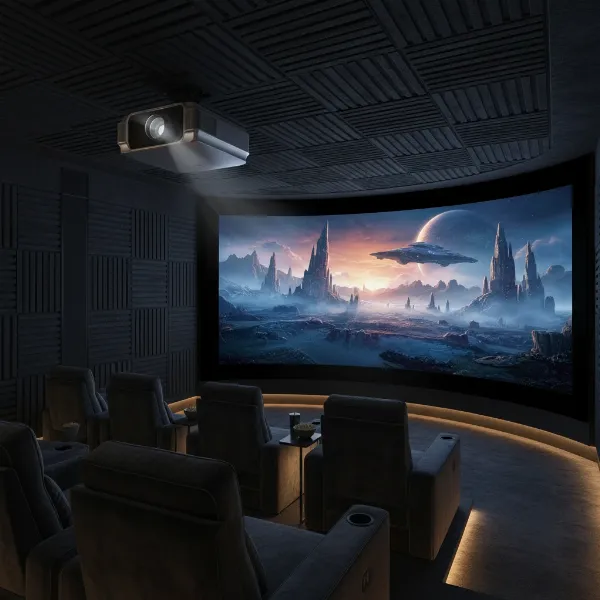 A high-end laser projector displaying an incredibly sharp, bright, and colorful image in a dedicated luxury home theater.
Detailed Comparison Table: Projector Types
| Feature | DLP Projector | LCD Projector | LED Projector | Laser Projector |
|---|---|---|---|---|
| Light Source | Lamp (some LED/Laser) | Lamp (some LED/Laser) | LED | Laser |
| Lifespan | 1,000-5,000 hours (lamp) | 1,000-5,000 hours (lamp) | 20,000-60,000+ hours | 20,000-30,000+ hours |
| Brightness | Good to Excellent | Good | Moderate to Good | Excellent |
| Contrast | Very Good | Good | Good | Excellent |
| Color Accuracy | Good | Very Good | Excellent | Outstanding |
| Maintenance | Lamp replacement, filter cleaning | Lamp replacement, filter cleaning | Minimal | Minimal |
| Initial Cost | Mid-range | Mid-range | Entry-level to Mid-range | High-end |
| Operating Cost | Moderate (due to lamp replacement & power) | Moderate (due to lamp replacement & power) | Low (long life, moderate power) | Low (very long life, efficient light source) |
| Best For | Home theater, gaming, business | Presentations, education, vibrant colors | Portable use, low maintenance, casual viewing | High-end home cinema, large venues, daily use |
Top Projectors for Every Budget
Navigating the projector market requires balancing features with your financial reality. Here’s a look at what you can expect across different price segments.
Affordable Projectors (Under $500)
For those just stepping into the world of large-screen entertainment, budget-friendly projectors offer an accessible entry point. These often utilize LED light sources, providing decent image quality for casual viewing in dark rooms.
- Example 1: An entry-level LED projector might offer 1080p resolution with around 2,000 ANSI lumens. Its main advantage is a long LED lifespan, reducing future costs. However, brightness may be limited, making it best for dedicated dark spaces.
- Example 2: Another option could be a compact DLP projector, known for sharp images, often with slightly higher brightness but a shorter lamp life, requiring eventual bulb replacements which add to the running cost. These are ideal for movie nights or occasional gaming.
Mid-Range Projectors ($500 – $1,500)
In this segment, you’ll find a significant leap in performance, including higher resolutions, better brightness, and more advanced features. This is often the sweet spot for a compelling home theater experience.
- Example 1: A 4K UHD DLP projector with 2,500-3,000 ANSI lumens, offering excellent detail and brightness suitable for diverse environments. The initial investment is higher, but the cinematic quality justifies the cost for many enthusiasts.
- Example 2: An advanced LCD projector known for its color vibrancy and detail, often with lens shift features for easier installation. These might still use lamps, so consider the replacement cost as part of the overall budget.
High-End Projectors (Above $1,500)
At the premium end, laser projectors dominate, delivering unparalleled image quality, brightness, and longevity. These are designed for discerning users who demand the best in home cinema.
- Example 1: A native 4K laser projector with over 3,000 ANSI lumens, offering incredible contrast and color accuracy, a virtually maintenance-free light source, and extended lifespan. The high upfront cost is balanced by long-term reliability and superior performance.
- Example 2: An ultra-short-throw laser projector that can sit inches from the wall, projecting a massive image with minimal installation hassle. These are often used as TV replacements in living rooms, providing convenience alongside premium visuals.
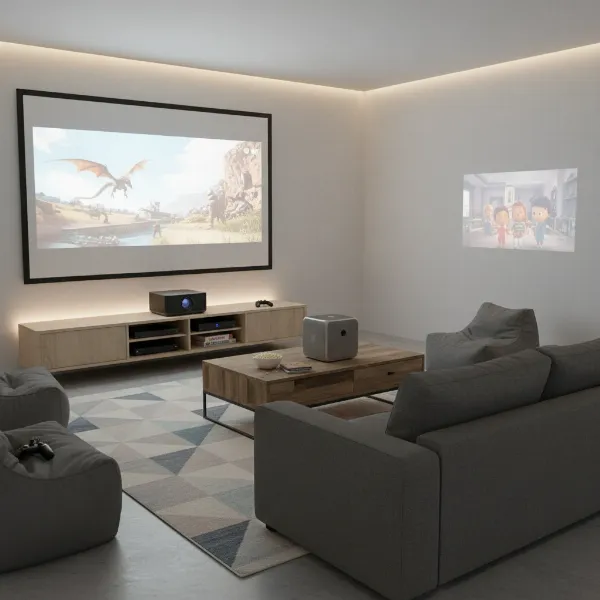 A versatile projector setup in a modern living room, demonstrating how a projector can adapt to different budget needs and room sizes.
How to Buy the Right Projector for Your Needs
Navigating the market for a projector, especially when considering its cost versus a TV, involves a few strategic steps. The goal is to maximize your investment for the ultimate viewing experience.
- Define Your Usage Needs: Are you planning daily TV replacement, occasional movie nights, intense gaming, or professional presentations? Your usage frequency directly impacts concerns like light source lifespan and power consumption. For everyday viewing, a laser or LED projector with a longer lifespan may prove more cost-effective in the long run than a lamp-based model due to reduced replacement costs.
- Set a Realistic Budget: Your budget should encompass more than just the projector itself. Factor in a screen (which can range from $50 for a basic model to hundreds or even thousands for motorized or ALR screens), mounting equipment (around $100-$150), and potentially an external audio system if the projector’s built-in speakers are insufficient (a good Bluetooth speaker can add $150). Remember that for comparable screen sizes above 100 inches, a projector system is often more affordable than an equivalent TV.
- Understand Key Specifications: Don’t get lost in jargon. Focus on brightness (lumens) for your room’s ambient light conditions, resolution (1080p or 4K) for image detail, and contrast ratio for picture depth. The type of light source (lamp, LED, or laser) is crucial for understanding long-term maintenance and replacement costs.
- Read Reviews and Ask for Recommendations: User reviews and expert opinions can provide invaluable real-world insights into a projector’s performance and reliability. Consider reviews from platforms like Reddit, where users discuss long-term ownership experiences and unexpected costs.
- Purchase from Reputable Retailers: Buying from established stores or authorized dealers ensures you receive genuine products, valid warranties, and reliable customer support, which can be critical for any potential issues or repairs.
Essential Tips for Projector Use and Maintenance
To ensure your projector delivers years of stunning visuals and remains a cost-effective entertainment solution, proper care and maintenance are paramount. Overlooking these simple steps can lead to premature wear, reduced performance, and unexpected repair expenses.
- Regular Cleaning is Crucial: Dust is the enemy of projectors. Regularly clean the lens with a soft, lint-free cloth and lens cleaning solution. For models with air filters, clean or replace them according to the manufacturer’s recommendations. Clogged filters can lead to overheating, which significantly shortens the light source’s life and can damage internal components. A professional cleaning every one to two years can also help maintain optimal performance.
- Optimize Your Environment: Projectors perform best in controlled environments. If possible, use your projector in a dark room to maximize image quality and allow you to use “Eco-mode,” reducing power consumption and extending light source life. Ensure adequate ventilation around the projector to prevent overheating.
- Handle with Care: Projectors, especially lamp-based ones, are delicate. Avoid moving a projector immediately after it’s been turned off, as the lamp is still hot and susceptible to damage. Always allow it to cool down completely. When storing, keep it in a cool, dry place, ideally in its original packaging or a protective case.
- Address Common Issues Promptly:
- Dim Image: This often indicates a degrading lamp (for lamp-based projectors) or accumulated dust. Check your lamp hours and clean filters.
- Overheating Warnings: Immediately check for blocked vents and clean filters. If the problem persists, professional servicing might be required.
- Flickering or Color Issues: This could be a loose cable connection, a failing light source, or an internal component issue. Start by checking connections.
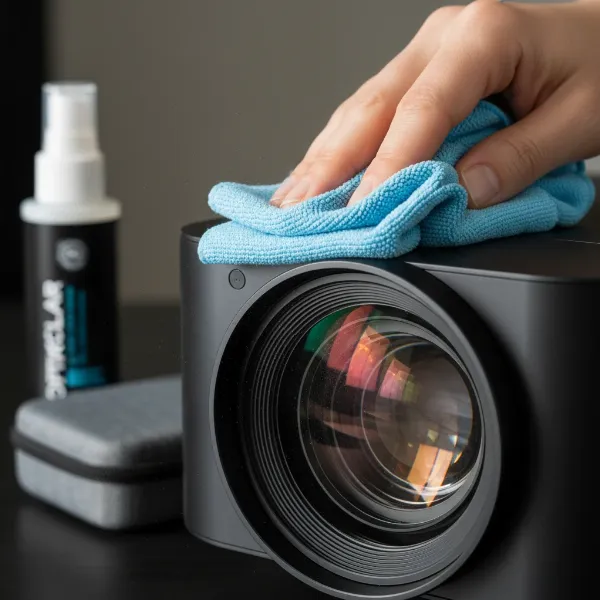 A close-up of a person carefully cleaning the lens of a projector with a microfiber cloth, emphasizing proper maintenance.
By following these maintenance guidelines, you can significantly extend the life of your projector, minimize the need for costly repairs or replacements, and truly benefit from its large-screen capabilities for years to come.
“Many users are surprised to learn that while TVs are often cheaper initially for smaller screen sizes, the total cost of ownership for a truly immersive, large-screen experience often favors modern laser projectors due to their incredible longevity and reduced maintenance.” – Sarah Chen, Home Theater Specialist
Conclusion
The debate between a projector and a TV boils down to more than just the sticker price; it’s a comprehensive evaluation of initial investment, power consumption, maintenance, and overall lifespan. While TVs historically held an advantage in perceived simplicity and lower running costs for everyday viewing, the landscape has dramatically shifted with the advent of LED and laser projection technologies.
For a comparable screen size of 100 inches or more, a projector system (including a screen) is often significantly more cost-effective upfront than a television. Modern laser projectors, with lifespans exceeding 20,000 to 30,000 hours, now offer longevity on par with, or even surpassing, that of most modern TVs, effectively eliminating the frequent lamp replacement costs of older models. While TVs generally consume less power, projectors with “Eco-modes” and efficient light sources are becoming increasingly competitive. Therefore, if a vast, cinematic, immersive experience is your priority, a projector often presents a superior long-term value.
Ultimately, the best choice hinges on your specific needs, viewing habits, and budget. What kind of visual journey do you envision for your space?
Frequently Asked Questions
Are laser projectors more expensive to run than TVs?
Modern laser projectors, while having a higher initial purchase price than many TVs, are often not more expensive to run in the long term. Their light sources can last 20,000-30,000 hours or more, eliminating the need for costly lamp replacements, and their power consumption can be competitive with larger TVs, especially when considering the immense screen size they provide.
How much does projector lamp replacement typically cost?
For traditional lamp-based projectors, a replacement lamp typically costs between $100 and $500, depending on the model. This expense, combined with the lamp’s relatively short lifespan (1,000 to 5,000 hours), is a significant factor in the running cost of older projector models.
Do projectors use more electricity than TVs?
Generally, TVs, especially modern LED/OLED models, tend to consume less power than projectors for comparable brightness levels, especially in well-lit rooms. However, power consumption varies widely by model and usage; some projectors offer “Eco-modes” that significantly reduce electricity usage.
What is the average lifespan of a modern projector compared to a TV?
Modern laser and LED projectors boast impressive lifespans, often reaching 20,000 to 60,000 hours for their light sources, which is comparable to or even longer than the expected lifespan of many modern smart TVs. This has largely closed the longevity gap that once favored televisions.
Are there hidden costs associated with owning a projector?
Beyond the projector unit, you should budget for a projection screen (which can range from under $100 to over $1,000), mounting hardware (around $100-$150), and potentially an external audio system, as built-in projector speakers are often modest. For lamp-based projectors, periodic lamp replacements are a recurring cost.
Can a projector truly replace a TV for daily viewing?
Yes, especially with the advancements in laser and LED projector technology, many modern projectors can serve as a primary display for daily viewing. They offer robust performance, long lifespans, and the immersive benefit of a massive screen, making them a viable alternative to traditional TVs for everyday entertainment.