Setting up a home theater or a presentation space often leads to a pivotal question: should you project directly onto a white wall, or is investing in a dedicated projector screen truly necessary? This dilemma puzzles many, from casual movie enthusiasts to seasoned professionals, as both options appear to offer a large display. However, the choice between a bare wall and a specialized projector screen significantly impacts your viewing experience, affecting everything from image clarity and color vibrancy to contrast and overall immersion. This article will delve into the fundamental differences, advantages, disadvantages, and critical factors to help you make an informed decision tailored to your specific needs and environment.
The Fundamental Differences: Wall vs. Screen
At first glance, a smooth, white wall might seem like an ideal, cost-free canvas for your projector. However, the subtle yet significant distinctions between a standard painted wall and an engineered projector screen contribute immensely to the final image quality. Understanding these core differences is crucial for anyone considering a projector setup.
Material and Surface Uniformity
A primary difference lies in the surface itself. Projector screens are meticulously crafted with specialized materials designed to optimize image quality. They provide an incredibly smooth, consistent, and uniform surface, ensuring that light is reflected evenly across the entire display. This uniformity is vital for delivering sharp, undistorted images, especially with high-resolution projectors (like 4K) where even minor imperfections become glaringly obvious. In contrast, standard wall paints are not optimized for projection. Walls often have subtle textures, minor bumps, cracks, or uneven paint application. These surface imperfections can cause visual distortions, blurring, or a “hotspot” effect, where some areas appear brighter than others, leading to a less cohesive and professional image.
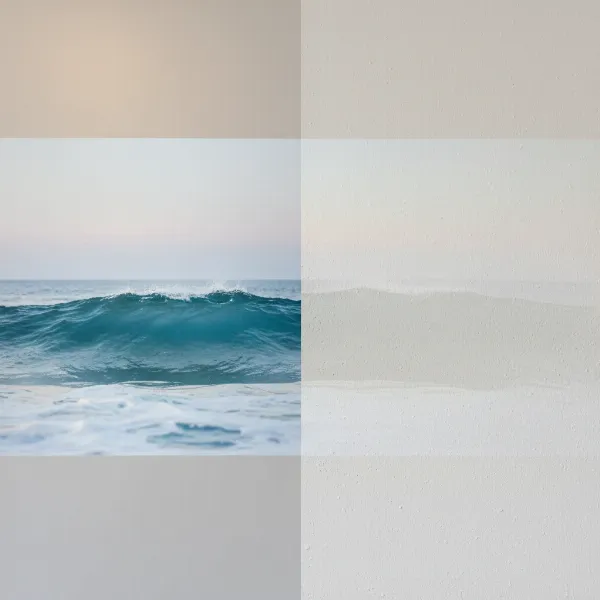 A side-by-side comparison of a smooth projector screen and a textured painted wall, highlighting surface differences.
Light Reflection and Gain
Projector screens are engineered for optimal light reflection. Many screens feature special coatings and specific “gain” properties, which determine how much light is reflected back to the viewer and in what direction. A screen with a neutral gain (1.0) reflects light uniformly, while screens with higher gain can make the image appear brighter, particularly useful in rooms with some ambient light. Conversely, negative gain screens are designed to absorb ambient light and boost contrast. A plain white wall, even a freshly painted one, lacks these optical enhancers. It simply scatters light indiscriminately rather than directing it efficiently back to the viewer. This often results in a dimmer, less vibrant image with reduced contrast, as the wall absorbs more light than a dedicated screen would.
Color Accuracy and Neutrality
Color reproduction is another critical area where screens outperform walls. Projector screens are designed to be color-neutral, ensuring that the colors projected are accurately represented without any tint or shift. This is essential for maintaining the filmmaker’s or presenter’s original vision. Most “white” walls, however, are rarely a truly neutral white. Standard paints often have subtle undertones—be it a slight beige, grey, blue, or yellow tint—to complement interior décor. These subtle chromatic offsets, imperceptible to the naked eye under normal lighting, can significantly alter the projected image, leading to skewed skin tones, unnatural landscapes, and an overall inaccurate color palette.
Projector Screens: Unpacking the Advantages
Opting for a dedicated projector screen brings a host of benefits that significantly elevate the viewing experience. These advantages stem from the specialized design and materials used in their construction, making them the preferred choice for discerning viewers.
Enhanced Image Quality (Brightness, Contrast, Sharpness)
The most noticeable advantage of a projector screen is the dramatic improvement in image quality. Screens are designed to maximize the projector’s output, resulting in brighter, more vivid images with superior contrast. The specialized surfaces and coatings enhance light reflectivity, making whites appear whiter and blacks appear deeper. This optimized reflection also contributes to a sharper image, as light is focused more precisely, preventing the fuzzy or diffused look that can occur on an unprepared wall.
Superior Color Reproduction
Dedicated projector screens ensure faithful color reproduction. Their neutral white or grey surfaces and advanced optical coatings prevent color shifts, allowing your projector to display colors as intended. This means truer reds, richer blues, and more natural skin tones, leading to a much more immersive and lifelike visual experience compared to the subtle (or not-so-subtle) color distortions often seen on painted walls.
Ambient Light Rejection (ALR) Technology
A significant innovation in projector screens is Ambient Light Rejecting (ALR) technology. ALR screens are engineered with microscopic structures and multi-layered optical coatings that selectively reflect light from the projector while absorbing or deflecting ambient light coming from other angles (like windows or room lights). This capability dramatically improves image quality in rooms that aren’t completely dark, maintaining contrast and color saturation even in well-lit environments. A plain white wall offers no such light rejection, causing images to appear washed out and faded in the presence of any ambient light.
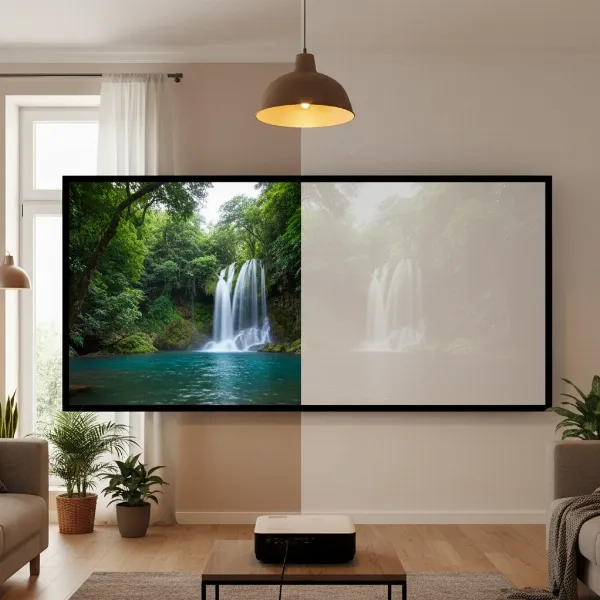 A projector displaying a vibrant image on an ALR screen in a moderately lit room, next to a washed-out image on a white wall.
Versatility and Customization
Projector screens offer a wide range of versatility and customization options to suit various spaces and needs. You can choose from fixed-frame screens for a permanent, cinema-like installation, retractable screens (manual or motorized) that disappear when not in use, or portable screens for on-the-go presentations or outdoor movie nights. They come in various sizes and aspect ratios (e.g., 16:9 for movies, 4:3 for presentations), allowing you to select the perfect fit for your content and room dimensions.
Projecting on a White Wall: When It Might Work
While a projector screen generally offers superior performance, there are scenarios where projecting directly onto a white wall can be a viable, if not ideal, solution. Understanding these conditions helps manage expectations and leverage the wall’s inherent advantages.
Cost-Effectiveness and Convenience
The most obvious benefit of using a white wall is the immediate cost savings and unparalleled convenience. There’s no additional purchase required, and setup is as simple as aiming your projector. For those on a tight budget or in temporary setups, a wall provides an instant, expansive display without the investment or installation effort of a dedicated screen. It’s an excellent option for casual viewing, gaming, or impromptu movie nights where absolute image perfection isn’t the top priority.
Conditions for Acceptable Quality
For a white wall to deliver even acceptable image quality, several conditions must be met. The wall surface should be as smooth and uniform as possible, free from any texture, bumps, or cracks. A freshly painted, perfectly flat wall will yield better results than an old, uneven one. Crucially, the viewing environment must be as dark as possible. In a completely darkened room, free from any ambient light, the deficiencies of a white wall in terms of light reflection and contrast become less pronounced. Lastly, using a projector with high brightness (lumens) can help compensate for the wall’s lower reflectivity, making the image appear more vibrant even if color accuracy is compromised.
Limitations and Compromises
Despite its conveniences, projecting onto a white wall comes with significant limitations. Images often appear less bright and vibrant, with blacks looking more like dark grey due to the wall’s inability to absorb light effectively. Colors can be washed out, dull, or tinted if the wall is not a perfectly neutral white. Any existing texture or minor imperfections on the wall surface will become magnified, leading to a loss of sharpness and potential visual distortions, especially for detailed or high-resolution content. Furthermore, the lack of ambient light rejection means that even minimal room lighting can severely degrade the projected image, making it difficult to view.
The Middle Ground: Projector Paint
For those seeking a compromise between the cost of a dedicated screen and the limitations of a bare wall, specialized projector paint offers an intriguing middle ground. This option allows you to transform a section of your wall into a high-performance projection surface.
What is Projector Paint?
Projector paint is a specially formulated paint designed to enhance image quality when projecting onto a wall. Unlike standard wall paint, projector paints often contain light-reflecting particles and are engineered for specific light gain and color neutrality. They typically come in various shades, including neutral white, grey, or even silver, to optimize for different viewing conditions (e.g., grey for better contrast in rooms with some ambient light).
Pros and Cons of Projector Paint
Pros:
- Improved Image Quality: Offers significantly better brightness, contrast, and color accuracy than standard wall paint.
- Custom Size and Shape: Allows for a completely customized screen size and aspect ratio without the limitations of pre-fabricated screens.
- Seamless Integration: The “screen” is part of the wall, maintaining a clean, minimalistic aesthetic when the projector is off.
- Durability: A painted surface is generally robust and easy to clean.
Cons:
- Cost: While often cheaper than high-end screens, specialized projector paint can still be a notable investment, especially for large areas.
- Application Effort: Requires careful application to achieve a perfectly smooth and uniform surface, which can be a time-consuming DIY project.
- Permanent: Painting a wall means a permanent “screen” that cannot be easily moved or adjusted like a portable screen.
- Less Ambient Light Rejection: While better than standard paint, most projector paints do not match the advanced ALR capabilities of dedicated ALR screens.
Considerations for DIY Projector Walls
If considering projector paint, ensure your wall is perfectly smooth before application. Sanding, priming, and multiple coats may be necessary to achieve the desired effect. Research different paint formulations and colors to match your projector’s capabilities and room lighting conditions. Some projector paints are specifically designed for certain projector types (e.g., ultra-short throw), so choose wisely.
Key Factors to Consider When Deciding
Making the right choice between a white wall and a projector screen hinges on several critical factors unique to your situation. Evaluate these points carefully to determine which option best suits your needs.
Your Budget
Budget is often the primary driver. Projecting onto a white wall is the most cost-effective option, as it requires no additional purchase. Projector paints represent a moderate investment, offering a performance upgrade without the full cost of a screen. Dedicated projector screens span a wide price range, from affordable pull-down models to high-end fixed-frame or ALR screens, demanding a significant investment. Consider how much you are willing to spend to achieve your desired viewing experience.
Your Viewing Environment (Light Control)
The amount of ambient light in your viewing area is paramount. If you have a dedicated home theater room with complete light control, a smooth white wall or basic screen might suffice. However, if your space has windows, open doorways, or other light sources that cannot be fully blocked, a dedicated screen—especially an ALR screen—becomes almost essential. In bright conditions, ALR screens can make a monumental difference in maintaining image quality.
Desired Image Quality and Critical Viewing
How critical are you about image quality? For casual viewing, background sports, or children’s cartoons, a white wall may be perfectly acceptable. However, for movie enthusiasts, serious gamers, or professional presentations where color accuracy, deep blacks, and sharp detail are crucial, a dedicated projector screen is indispensable. Screens reveal the full potential of your projector’s capabilities, especially with 1080p and 4K content.
Portability and Permanence
Consider whether your projection setup needs to be permanent or portable. A white wall is a fixed, permanent solution. Retractable screens offer a semi-permanent solution that can be hidden when not in use, providing a clean aesthetic. Portable screens are ideal for those who need to move their projector between rooms, take it outdoors, or use it for travel and presentations.
Projector Type (Resolution, Brightness, Short-Throw)
The specifications of your projector also influence the choice of surface. High-resolution projectors (4K, 1080p) will mercilessly expose any imperfections on a wall surface. High-brightness projectors can somewhat mitigate the dimness of a wall. Short-throw and ultra-short-throw projectors, which project from a very close distance, are particularly sensitive to surface flatness. Even minor wall irregularities can cause severe geometric distortion or focus issues with these types of projectors. For such projectors, a perfectly flat screen or a tensioned screen is highly recommended.
Do You Really Need a Screen? Making Your Decision
Ultimately, the question of whether you need a projector screen boils down to a balance of your priorities. Is it budget and convenience, or is it uncompromising image quality?
For casual viewers, students, or those on a very tight budget, a smooth, matte white wall can be a perfectly adequate and accessible solution, especially in a dark room. It offers instant gratification and an impressive large image without extra cost.
However, for home theater enthusiasts, serious gamers, or professionals who demand the best possible image quality, vibrant colors, deep contrast, and clear detail, a dedicated projector screen is an undeniable necessity. Screens are purpose-built to maximize your projector’s performance, providing a cinematic experience that a bare wall simply cannot match. If you’ve invested in a quality projector, a screen allows you to unlock its full potential.
The middle ground of projector paint is an excellent option for those who want a significant upgrade over a standard wall, desire a seamless aesthetic, and are willing to put in the effort for a DIY solution, all while saving some cost compared to a high-end screen.
Consider your investment in the projector itself. If you’ve spent a significant amount on a high-resolution, bright projector, pairing it with a sub-optimal surface like a bare wall would be akin to buying a sports car and putting on budget tires – you simply won’t get the best performance.
Conclusion
The debate between a white wall and a projector screen is a fundamental one for any projector owner. While projecting onto a wall offers undeniable convenience and cost savings, it inevitably comes with compromises in image quality, including reduced brightness, washed-out colors, lower contrast, and potential distortions from surface imperfections. A dedicated projector screen, with its specialized materials, optimized light reflection, and features like ambient light rejection, is engineered to deliver the best possible visual experience, unleashing your projector’s full potential for vibrant, sharp, and accurate images.
Ultimately, the “need” for a screen depends on your personal priorities and viewing environment. For the best cinematic experience, superior color accuracy, and optimal performance in varied lighting conditions, a projector screen is an essential investment. But if casual viewing, budget, and flexibility are your main concerns, a carefully prepared white wall can certainly serve its purpose. So, which canvas will you choose to bring your projected content to life?
Frequently Asked Questions
Does a projector look better on a wall than a screen?
A projector image almost always looks better on a dedicated screen than on a wall. Screens are specifically designed to reflect light evenly, providing superior color accuracy, contrast, and sharpness. Walls typically have uneven surfaces, absorb more light, and can lead to less vibrant colors and less defined images.
Can I use my projector without a screen?
Yes, you can use a projector without a screen by projecting directly onto a wall. However, the image quality will likely suffer, resulting in reduced brightness, sharpness, and washed-out colors, especially if the wall surface is not perfectly smooth or if there is ambient light in the room.
Are projector screens better for your eyes?
Projector screens can indeed be better for your eyes due to their larger viewing area and the use of reflected light, which typically reduces glare and the intensity of direct light compared to traditional TVs or monitors. This can potentially lead to less eye strain, though overall eye comfort also depends on the viewing environment and image brightness.
Is a white wall good for a projector?
A white wall can serve as a makeshift surface for a projector, and many people use it for casual viewing, particularly if it’s perfectly smooth and the room is very dark. However, it will not provide the same level of color accuracy, brightness, or clarity as a screen specially designed for projecting images.
What is projector paint and is it worth it?
Projector paint is a specialized paint formulated to improve projection quality on a wall by enhancing light reflection, color neutrality, and contrast. It can be a worthwhile investment for those seeking a significant upgrade over standard paint without the full cost of a physical screen, offering a customizable, seamless, and permanent projection surface.