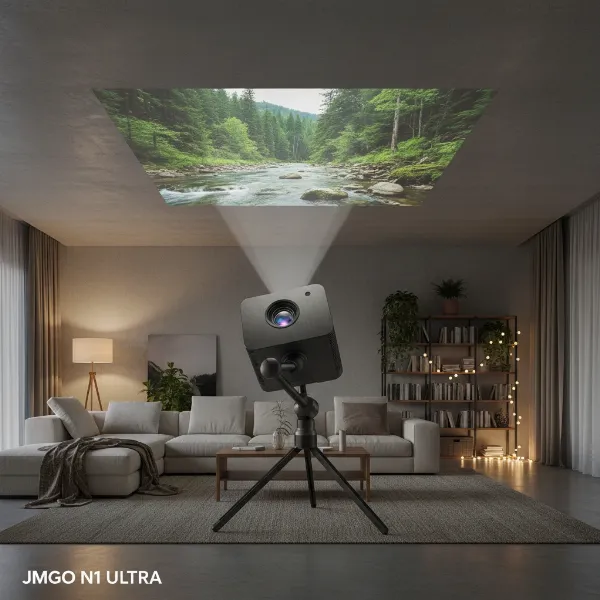
Choosing the right projector can transform your viewing experience, whether you’re building a dedicated home theater, setting up an office presentation, or planning an outdoor movie night. With countless options flooding the market, identifying reliable brands that consistently deliver quality, innovation, and value is crucial. This guide will navigate the exciting world of projectors, helping you understand key features and introducing you to the top five brands you can confidently trust for your projection needs. We’ll delve into what makes these brands stand out and how their offerings align with different user requirements, ensuring you make an informed decision for years of immersive entertainment or professional use.
Understanding Projectors: More Than Just a Light Show
At its core, a projector is an optical device that takes an image signal and projects it onto a surface, typically a screen, to create a much larger display than a traditional television. Initially, projectors were bulky and primarily used for business presentations or large auditoriums. Over time, advancements in technology have revolutionized their capabilities, making them compact, powerful, and accessible for a wide range of applications, from cinematic home entertainment to dynamic gaming sessions and crisp business displays.
The evolution of projectors has seen significant milestones, moving from basic slide projectors to sophisticated digital systems. Early digital projectors relied on lamps for illumination and limited display technologies. Today, we have a diverse landscape featuring different imaging technologies (DLP, LCD, LCOS) and light sources (Lamp, LED, Laser), each offering unique advantages in terms of image quality, lifespan, and overall performance.
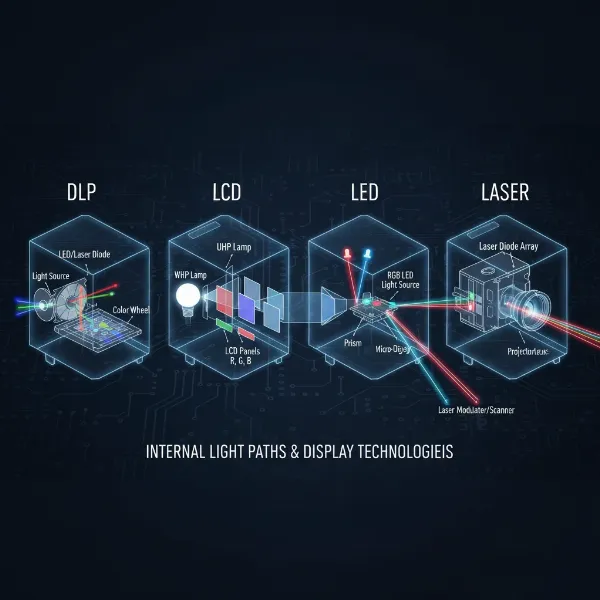 Overview of different types of projectors including DLP, LCD, LED, and Laser technologies
Essential Factors When Choosing a Projector
Selecting a projector that perfectly fits your needs involves understanding several critical technical specifications. These factors directly influence image quality, performance, and the overall user experience.
Brightness (Lumens): This refers to the light output of a projector, typically measured in ANSI lumens. The ideal brightness depends heavily on your viewing environment. For a dedicated, light-controlled home theater, 1,500-2,500 ANSI lumens might suffice. However, for rooms with ambient light or outdoor use, you’ll need a brighter projector, potentially ranging from 3,000 to 5,000+ ANSI lumens to ensure a clear and vibrant image. Some manufacturers also use ISO lumens, so understanding the difference is important for accurate comparison.
Resolution: This is the number of pixels a projector can display, directly impacting image sharpness and detail. Common resolutions include:
- SVGA (800×600) & XGA (1024×768): Suitable for basic presentations where fine detail isn’t critical.
- 720p (1280×720): Entry-level HD, good for casual viewing.
- 1080p (1920×1080) Full HD: The standard for most home entertainment, offering a sharp picture.
- 4K UHD (3840×2160): Delivers incredible detail and clarity, often achieved via pixel shifting for consumer models, or native 4K for high-end units.
- 8K: Emerging in ultra-premium models, offering the ultimate in resolution.
Contrast Ratio: This measures the difference between the brightest whites and the darkest blacks a projector can produce. A higher contrast ratio results in more detailed shadows, richer colors, and a greater sense of depth in the image. It’s especially crucial for cinematic viewing, where deep blacks enhance realism and immersion.
Light Source Lifespan: Projectors use different light sources, each with varying lifespans and maintenance requirements:
- Lamp-based: Traditional, bright, but lamps need replacement every 2,000-5,000 hours, adding to running costs and generating more heat and noise.
- LED-based: Offer long lifespans (up to 20,000+ hours), are energy-efficient, cooler, and provide consistent color with instant on/off. They typically have lower peak brightness.
- Laser-based: Provide supreme brightness, pristine color, exceptional contrast, and extended lifespans (20,000+ hours) with minimal degradation over time. They also offer instant on/off but come with a higher initial cost.
Keystone Correction: This feature corrects distorted images that occur when the projector isn’t perfectly perpendicular to the screen. Vertical and horizontal keystone correction electronically adjusts the image to make it rectangular. While convenient, optical lens shift is preferred for higher image quality as digital correction can slightly degrade resolution.
Throw Ratio: This indicates the distance required between the projector and the screen to achieve a certain image size.
- Standard Throw: Requires significant distance.
- Short Throw: Can project large images from a short distance, ideal for smaller rooms.
- Ultra-Short Throw (UST): Can sit just inches from the wall, virtually replacing a TV and eliminating shadows when walking past.
Connectivity: Modern projectors offer a range of input options. HDMI is standard for video and audio. Other common ports include VGA (for older computers), USB (for media playback or charging smart dongles), and wireless connectivity (Wi-Fi, Bluetooth) for streaming or connecting external audio devices.
Decoding Projector Technologies: DLP, LCD, LED, and Laser
Projector technologies are broadly categorized by how they create an image (imaging technology) and how they produce light (light source). Understanding these distinctions is key to appreciating a projector’s performance.
DLP Projectors
DLP, or Digital Light Processing, technology utilizes a Digital Micromirror Device (DMD) chip. This chip contains millions of microscopic mirrors, each representing a single pixel. These mirrors rapidly tilt thousands of times per second, either reflecting light towards the lens to create an on-pixel or away from it to create an off-pixel. A spinning color wheel then adds red, green, and blue to form the full-color image.
- Pros: DLP projectors are renowned for their sharp visuals, smooth motion handling, and often good contrast levels. Their compact chip design allows for smaller projector footprints, making them popular for portable models. They are also known for being durable and low-maintenance.
- Cons: Some sensitive viewers may occasionally perceive a “rainbow effect,” which appears as brief flashes of color, especially in high-contrast scenes.
- Ideal Use: Excellent for business presentations, gaming due to low input lag, and portable entertainment where a compact size is beneficial.
|
Our Picks for the Best projector in 2026
As an Amazon Associate I earn from qualifying purchases.
|
||
| Num | Product | Action |
|---|---|---|
| 1 | Epson Pro EX9270 Wireless 1080p 3LCD Projector 4,100 Lumens Color and White Brightness, Apple AirPlay, Miracast, Stream from Phone or Laptop, 2 HDMI Ports, 1.6x Optical Zoom, Built-In Speaker |

|
| 2 | [Built-in Official Apps/4K Support] Smart Outdoor Projector with WiFi and Bluetooth, 800ANSI Movie Projector, DoIby Audio with Dual Speaker, Auto Focus w/ YouTube&PrimeVideo Proyector, Upgrad P62 Pro |
|
| 3 | Projector-4K with WiFi and Bluetooth:[3500 ANSI/60W Dolby Audio/Official Licensed Apps], Outdoor-Projector with Smart OS 2.0 & AI Auto Focus,ONOAYO ONO5Pro 2.0 Smart Movie Projector for Indoor/Outdoor |
|
| 4 | HAPPRUN Native 1080P Bluetooth Mini Projector, Full HD Portable Outdoor Movie Projector with Built-in Speaker, Compatible with Smartphone, HDMI, USB, AV, Fire Stick, PS5 for Home, Bedroom, Outdoor Use |
|
| 5 | Aurzen Roku TV Smart Projector with Wifi and Bluetooth, Roku Streaming Experience Built-in, 1080P FHD, DoIby Audio, Auto Focus & Keystone, Zoom, Movie Portable Outdoor Mini Projector, White |
|
| 6 | 【Official Licensed Google TV】4K Smart Projector with WiFi and Bluetooth, VOPLLS Outdoor Projectors with Dolby/Auto Focus, Portable Movie Phone Wireless Gaming Wifi Proyector for Bedroom/Home/Celling |
|
| 7 | [3500 ANSI/ Official Apps/65W Audio] Outdoor 4K Projector with WiFi and Bluetooth, Auto Focus, Auto Keystone Smart Projector Support DoIby Audio, 2026 Upgrade GO2 Short Throw Projector with 360°Stand |
|
| 8 | 1500 ANSI Official Licensed Google TV Smart Projector, HAPPRUN 4K Full HD Home Theater with Auto Focus, Dolby Sound, Wi-Fi Bluetooth, Built-in Apps, Compatible with Phone & PC, Indoor & Outdoor Use |
|
| 9 | 【Officially-Licensed APP & Native 1080P】Thinnest 1.81\" Smart Mini Projector with WiFi and Bluetooth, Auto Focus & Keystone Portable Outdoor Projector, VOPLLS 4K Support Home Movie Projector |
|
| 10 | Epson Pro EX11000 3-Chip 3LCD Full HD 1080p Wireless Laser Projector, 4,600 Lumens Color/White Brightness, Miracast, 2 HDMI Ports, USB Power for Streaming, Built-in 16W Speaker |
|
LCD Projectors
LCD (Liquid Crystal Display) projectors operate by passing light through three separate liquid crystal panels—one each for red, green, and blue. These panels manipulate the light to create the image, which is then recombined and projected onto the screen. This three-chip design means that all colors are projected simultaneously.
- Pros: LCD projectors are celebrated for their rich, accurate color reproduction and generally brighter images for comparable lumen ratings. Crucially, they do not suffer from the “rainbow effect” sometimes associated with DLP, offering a smoother viewing experience for all. Many LCD models are also energy-efficient.
- Cons: They can be bulkier than single-chip DLP projectors and may exhibit slightly lower contrast ratios or less intense black levels compared to high-end DLP or LCOS models.
- Ideal Use: Popular for home theaters, classrooms, and business environments where color accuracy and a rainbow-free image are priorities.
LED Projectors
LED (Light Emitting Diode) refers to the light source technology, rather than the imaging system. LED projectors use individual red, green, and blue LEDs to generate light, which then passes through either a DLP chip or LCD panels.
- Pros: The most significant advantage of LED projectors is their exceptional lifespan, often exceeding 20,000 hours, meaning you may never need to replace a bulb. They are highly energy-efficient, produce less heat, and offer instant on/off functionality. LED light sources also provide consistent brightness and color accuracy over their entire operational life.
- Cons: Historically, LED projectors have had lower peak brightness compared to lamp or laser models, making them less suitable for very bright rooms or extremely large screens. However, brightness levels are steadily improving.
- Ideal Use: Perfect for portable projectors, casual home entertainment, and environments where long-term, low-maintenance operation and energy efficiency are desired.
Laser Projectors
Laser is another light source technology that can be paired with DLP, LCD, or LCOS imaging systems. Laser projectors use powerful laser diodes (either single blue lasers combined with phosphor wheels or pure RGB tri-lasers) to generate light.
- Pros: Laser projectors offer supreme brightness, delivering vibrant images even in rooms with significant ambient light. They excel in color accuracy and contrast, providing cinematic quality with deep blacks and a wide color gamut. Like LEDs, lasers boast an exceptionally long operational lifespan (20,000+ hours) with minimal degradation, and they offer instant on/off. Tri-laser systems, in particular, unlock unparalleled color performance.
- Cons: The primary drawback is their higher initial purchase price due to the advanced technology involved.
- Ideal Use: Ideal for premium home theaters, large venue installations, and any application where uncompromising image quality, high brightness, and long-term reliability are paramount.
Detailed Comparison: DLP vs. LCD vs. LED vs. Laser
To help you differentiate, here’s a comprehensive comparison of these technologies:
| Feature | DLP Projectors | LCD Projectors | LED Light Source (paired with DLP/LCD) | Laser Light Source (paired with DLP/LCD/LCOS) |
|---|---|---|---|---|
| Imaging Tech. | Digital Micromirror Device (DMD) | Liquid Crystal Display (3 panels) | N/A (light source only) | N/A (light source only) |
| Light Source | Lamp, LED, or Laser | Lamp, LED, or Laser | LED diodes | Laser diodes (single or tri-laser) |
| Color Accuracy | Very good, but color wheel can cause artifacts | Excellent, rich, and vibrant | Excellent, consistent, and pure | Supreme, wide color gamut, precise |
| Contrast Ratio | Often high, sharp visuals | Good, but can be lower than DLP/LCOS | Good, depends on imaging tech | Excellent, deep blacks, high dynamic contrast |
| Brightness | Varies by light source | Varies by light source, often bright | Generally lower than lamp/laser (improving) | Highest, vivid images in ambient light |
| Lifespan | Varies by light source (2,000-20,000+ hrs) | Varies by light source (2,000-20,000+ hrs) | Very long (20,000+ hours) | Exceptionally long (20,000+ hours) |
| Rainbow Effect | Possible for sensitive viewers (single-chip DLP) | Not present | Not present (determined by imaging tech) | Not present (determined by imaging tech) |
| Maintenance | Low (if solid-state light source), no filters | Filters may need cleaning/replacement | Very low, no lamp replacement | Very low, no lamp replacement |
| Size | Often compact | Can be bulkier | Often compact/portable | Can vary, increasingly compact |
| Cost | Mid-range to high (depending on light source) | Mid-range to high (depending on light source) | Mid-range | Premium/High-end |
Top 5 Projector Brands You Can Trust
Navigating the projector market requires knowing which brands have built a reputation for innovation, reliability, and outstanding performance. Here are five of the most trusted projector brands, each excelling in different areas and offering exceptional products for various needs.
Epson: The Versatile Innovator
Epson has long been a powerhouse in the projection industry, known for its consistent quality and innovative 3LCD technology. Unlike many single-chip DLP projectors, Epson’s 3LCD models virtually eliminate the “rainbow effect” by processing all three primary colors simultaneously, resulting in vibrant, accurate, and smooth images. This commitment to color fidelity and a comfortable viewing experience makes Epson a go-to for many users.
- Strengths: Epson projectors excel in delivering bright, color-accurate images, making them ideal for both dedicated home theaters and brighter living spaces. They offer a wide range of products, from affordable home entertainment models to high-end laser projectors for serious videophiles and robust business/education solutions. Their Pro Cinema series, like the LS12000, offers genuine 4K resolution and a 2,700-lumen laser light source, ensuring top-tier image quality with excellent contrast and shadow detail.
- Why Trust Them: Epson’s long-standing presence and consistent positive reviews, especially for their 3LCD technology, highlight their reliability and commitment to a superior visual experience without common artifacts.
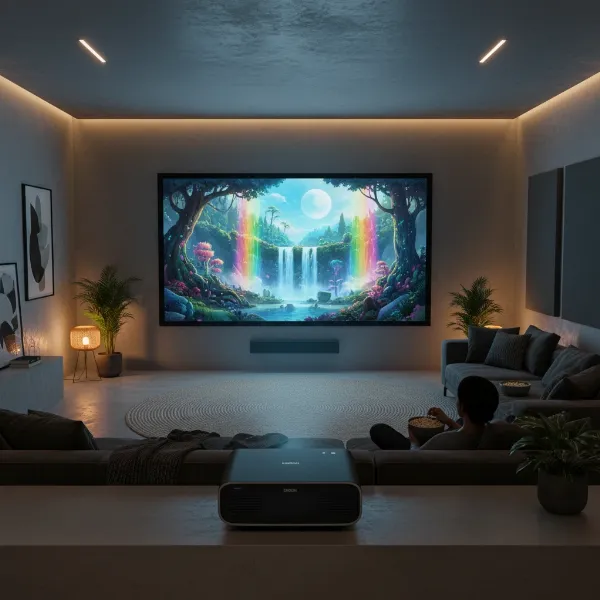 An Epson home cinema projector displaying a vibrant movie scene in a dimly lit living room, showcasing rich colors and sharp detail.
Hisense: Mastering Ultra-Short Throw and Smart Features
Hisense has carved a significant niche for itself, particularly in the ultra-short throw (UST) laser projector market. These “Laser TVs” are designed to sit just inches from a wall, projecting massive, vibrant images that can effectively replace a traditional television, even in rooms with ambient light. Hisense is synonymous with cutting-edge technology, integrating smart TV operating systems like Vidaa or Google TV directly into their projectors for seamless streaming.
- Strengths: Hisense projectors, such as the PX3-PRO TriChroma Laser Projector, offer impressive 4K resolution, high brightness (up to 3,000 ANSI lumens), and advanced HDR support including Dolby Vision, HDR10+, and HLG. Their triple-laser technology delivers a wide color gamut, producing stunningly rich and accurate colors. Many models also boast powerful integrated audio systems (e.g., JBL) and features like “Designed for Xbox” certification, making them versatile entertainment hubs.
- Why Trust Them: Hisense consistently pushes the boundaries of UST technology, offering premium features and smart integration at competitive prices, making them a trusted choice for those seeking a TV-like experience with projector scale.
BenQ: Precision for Gaming and Cinematic Brilliance
BenQ stands out for its focus on delivering projectors optimized for specific user experiences, particularly gaming and cinematic viewing. The brand is recognized for its DLP technology, often paired with LED or 4LED light sources, ensuring a balance of bright, crisp images and long-lasting performance.
- Strengths: BenQ projectors like the X3100i are hailed as top-tier gaming projectors, featuring ultra-short input lag (as low as 4.2ms at 1080p/240Hz), 4K resolution, and dedicated gaming modes. For movie enthusiasts, BenQ offers excellent color accuracy and contrast, creating a truly cinematic experience. Their mid-range models, such as the W2720i, provide brilliantly judged 4K pictures with effective integrated smart systems, making them exceptional value for quality home cinema.
- Why Trust Them: BenQ’s dedication to optimizing projectors for specific high-demand uses, coupled with their consistent performance in brightness, color, and responsiveness, builds strong user trust.
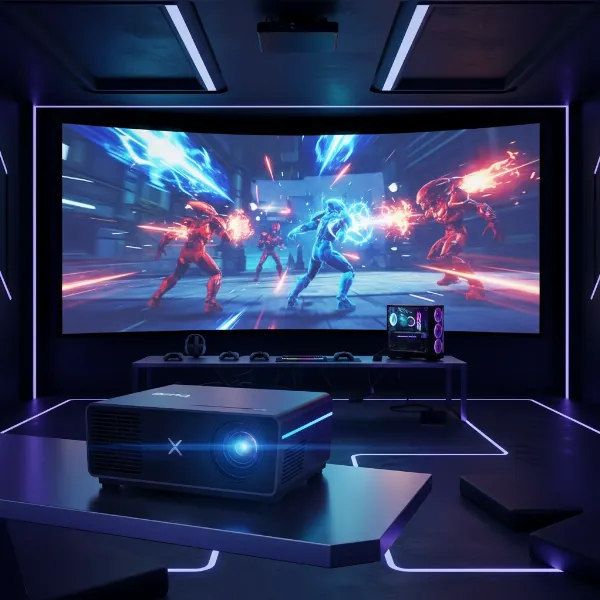 A BenQ gaming projector displaying an action-packed video game scene with low input lag, vibrant colors, and sharp resolution.
Sony: Unrivaled Home Cinema Experience
For those seeking the pinnacle of home cinema projection, Sony is a name that commands respect. Sony projectors, particularly their high-end models, utilize proprietary SXRD (Silicon X-tal Reflective Display) or LCoS (Liquid Crystal on Silicon) technology, which combines the best aspects of both DLP and LCD to deliver incredibly detailed images with superior contrast and exceptional black levels.
- Strengths: Sony is a leader in native 4K resolution, providing true pixel-for-pixel detail without relying on pixel shifting. Models like the VPL-XW5000ES offer stunning laser-lit 4K images with vibrant colors, excellent depth, and remarkable black levels, transforming any room into a cinematic space. Their projectors are often praised for their quiet operation and sophisticated image processing, making them a favorite among videophiles.
- Why Trust Them: Sony’s long-standing reputation for high-fidelity visual products, combined with their commitment to native 4K and advanced LCoS technology, establishes them as a top choice for serious home theater enthusiasts willing to invest in an unparalleled viewing experience.
JVC: The Enthusiast’s Choice for Black Levels
JVC is another brand that resonates with ultra-high-end home theater enthusiasts, particularly those who prioritize ultimate black levels and contrast. JVC’s D-ILA (Direct-Drive Image Light Amplifier) technology, a form of LCoS, is renowned for producing images with industry-leading native contrast ratios and incredibly deep, inky blacks.
- Strengths: JVC D-ILA projectors, such as the DLA-NZ800 or DLA-NZ900, deliver breathtaking 4K and even 8K (via e-shiftX processing) images with extraordinary detail and dimensionality. Their laser light sources ensure high brightness and a wide color gamut, further enhancing HDR content. For those who demand the most immersive and accurate cinematic picture possible, JVC’s ability to render the darkest scenes with exquisite detail is unmatched. They are also one of the few brands that continue to support 3D projection in their premium models.
- Why Trust Them: JVC’s unwavering focus on achieving the absolute best black levels and contrast in the market, along with their robust D-ILA technology, makes them a trusted brand for the most discerning home cinema aficionados.
Your Buying Guide: How to Choose the Right Projector
Selecting the perfect projector involves a careful consideration of your specific needs, environment, and budget. Follow these steps to make a smart choice:
- Identify Your Primary Use: Are you mainly watching movies in a dark home theater? Playing fast-paced video games? Presenting in a bright conference room? Or looking for a portable solution for outdoor movie nights? Your primary use will dictate the essential features you need, such as high contrast for cinema, low input lag for gaming, or high brightness for ambient light.
- Determine Your Budget: Projectors span a wide price range, from a few hundred dollars for entry-level portable models to tens of thousands for high-end home cinema powerhouses. Set a realistic budget to narrow down your options effectively. Remember to factor in potential accessory costs like screens, mounts, and sound systems.
- Understand Key Specifications: Pay close attention to brightness (lumens), resolution (1080p, 4K), contrast ratio, and the type of light source (LED or Laser for longevity, Lamp for high initial brightness at lower cost). Consider also the throw ratio for your room size and connectivity needs (HDMI 2.1 for modern consoles and players).
- Read Reviews and Expert Opinions: Consult reputable tech review sites and user forums. Look for consistent feedback on image quality, ease of use, fan noise, and long-term reliability. Reviews often highlight real-world performance that specifications alone might not convey.
- Consider the Room Environment:
- Ambient Light: For rooms with uncontrolled light, a brighter projector (3,000+ ANSI lumens) or an ultra-short throw (UST) laser projector with an ambient light rejecting (ALR) screen is often necessary.
- Room Size: Throw ratio is crucial. Small rooms may benefit from short or ultra-short throw projectors, while larger rooms offer more flexibility for standard throw models.
- Sound: Some projectors have decent built-in speakers, especially portable models. However, for a true cinematic experience, you’ll likely want to integrate a separate sound system.
Maximizing Your Projector’s Lifespan: Tips for Use and Maintenance
To ensure your projector provides years of optimal performance, proper care and maintenance are essential.
- Cleaning Projector Filters and Lens: Regularly clean the air filters (if applicable) to prevent dust buildup, which can lead to overheating and reduced performance. Use a soft, lint-free cloth and lens cleaner specifically designed for optical surfaces to gently clean the projector lens. Avoid abrasive materials that could scratch the lens.
- Proper Storage and Handling: When not in use, store your projector in a cool, dry place, ideally covered to protect it from dust. If it’s a portable model, use its carrying case for protection during transport. Avoid moving the projector while it’s hot or still running, as this can damage internal components or the lamp.
- Troubleshooting Common Issues: Familiarize yourself with your projector’s manual for basic troubleshooting. Common issues include connection problems (check cables and input sources), image distortion (use keystone correction or lens shift), and overheating (ensure proper ventilation and clean filters). For lamp-based projectors, note the lamp hours and replace the lamp before it fails to maintain optimal brightness.
“A well-maintained projector is not just a piece of hardware; it’s a gateway to countless immersive experiences, enduring longer and performing better with just a little attention.” – Admin, Projectorcam.com
Conclusion
Choosing a projector from a trusted brand means investing in quality, reliability, and innovative technology that will enhance your viewing experiences for years to come. Brands like Epson, Hisense, BenQ, Sony, and JVC consistently lead the market, each offering unique strengths tailored to different needs—from vibrant home entertainment and responsive gaming to unparalleled cinematic immersion. By understanding essential specifications like brightness, resolution, and contrast, and by choosing the right display and light source technologies, you can confidently select a projector that perfectly fits your lifestyle and budget. Remember that proper maintenance will also extend the life and performance of your chosen device. So, are you ready to transform your entertainment space and discover the perfect projector for your world?
Frequently Asked Questions
What is the primary difference between DLP and LCD projectors?
DLP projectors use microscopic mirrors for image creation and are known for sharp visuals and smooth motion, though some users might perceive a “rainbow effect.” LCD projectors use liquid crystal panels, offering excellent color accuracy without the rainbow effect, making them ideal for vibrant, comfortable viewing experiences.
Can I use a projector in a room with ambient light?
Yes, but you’ll need a projector with higher brightness (typically 3,000 ANSI lumens or more) and ideally pair it with an Ambient Light Rejecting (ALR) screen. Ultra-Short Throw (UST) laser projectors from brands like Hisense are specifically designed to perform well in brighter environments, making them suitable TV replacements.
How long do projector light sources typically last?
Traditional lamp-based projectors have a lifespan of 2,000 to 5,000 hours, requiring periodic replacement. LED and Laser light sources offer significantly longer lifespans, often exceeding 20,000 to 30,000 hours, providing years of maintenance-free operation with consistent brightness and color.